 alhodhodnews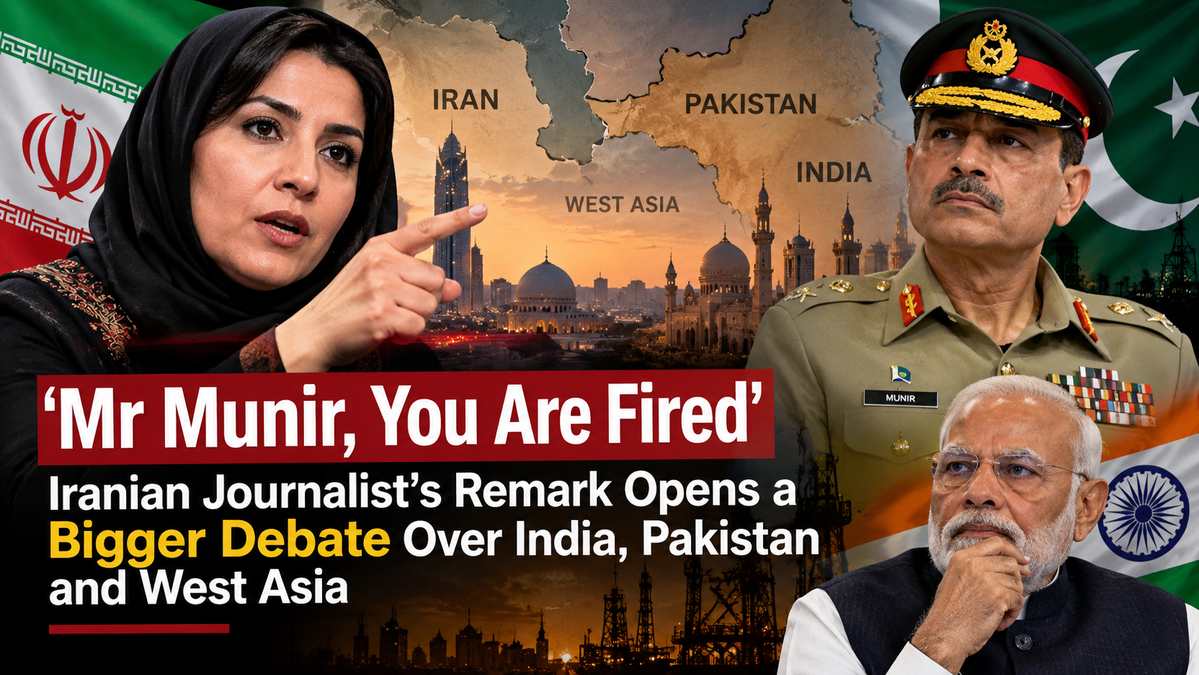
A sharp remark by Iranian journalist Basim Laleh at the BRICS summit in New Delhi has added an unexpected layer to the increasingly complicated diplomatic contest surrounding West Asia.
Speaking to ANI on the sidelines of the summit, Laleh directly addressed Pakistan Army Chief Field Marshal Asim Munir and said, “Mr Munir, you are fired.” He then praised Indian Prime Minister Narendra Modi and argued that India was playing a more significant role in the region.
The line quickly attracted attention because it reduced a complicated diplomatic competition to a memorable phrase.
But the bigger story is not whether an Iranian journalist has literally “fired” Pakistan’s army chief from a diplomatic role. He obviously has no such authority.
The more important question is why the journalist believes India’s regional role is becoming more prominent—and what that says about the changing diplomatic landscape around Iran, Pakistan and the Gulf.
A Dramatic Comment at a Major Diplomatic Gathering
The remarks came as New Delhi hosted the 2026 BRICS summit, bringing together leaders from countries with very different positions on the conflict and wider security tensions in West Asia.
Iranian President Masoud Pezeshkian was among the leaders engaging with India during the summit period. Modi also held discussions with Pezeshkian, with maritime security, freedom of navigation and the protection of seafarers among the issues raised.
Against that background, Laleh presented Modi as an increasingly important diplomatic figure.
His comments also contrasted India’s engagement with what he described as Pakistan’s inability to deliver a meaningful solution to the regional crisis.
But those are the journalist’s assessments, not an official statement from the Iranian government.
That distinction is essential.
What Did Laleh Actually Mean?
Laleh’s “you are fired” remark was clearly rhetorical.
He was criticizing Munir’s role and suggesting that Pakistan’s attempt to position itself as an important intermediary in the region had not produced the results he expected.
He then pointed toward Modi and India’s expanding engagement with Iran and other West Asian countries.
In effect, the journalist was arguing that the diplomatic landscape had changed.
Rather than Pakistan being the obvious bridge between Iran and other regional or international powers, he sees India taking a more visible role.
That interpretation is debatable—and it is worth treating it as commentary rather than established geopolitical fact.
India’s Approach Is Different From Pakistan’s
India and Pakistan have both maintained relationships across West Asia, but their diplomatic positions are not identical.
Pakistan has longstanding defense and political relationships with Gulf states and has also maintained channels with Iran.
In recent weeks, Islamabad has tried to balance its relationship with Saudi Arabia while maintaining communication with Tehran as tensions involving the Iran-backed Houthis and Saudi Arabia have increased.
Reuters reported that Pakistan has delivered messages urging Iran to restrain the Houthis and has held diplomatic contacts with Iranian officials. At the same time, Islamabad has faced pressure because of its security commitments to Saudi Arabia.
India, meanwhile, has been pursuing its own multi-directional diplomacy.
New Delhi maintains relations with Iran while also working closely with Gulf Arab states and the United States.
That gives India several channels through which it can engage with different sides of a fractured region.
Modi’s Message to Iran Was Focused on Stability
The India-Iran discussions during the BRICS summit offer a more concrete picture than the journalist’s dramatic remarks.
During talks with Pezeshkian, Modi emphasized freedom of navigation, maritime commerce and the safety of seafarers.
The issues are particularly important because instability around regional waterways has direct consequences for international trade and energy supplies.
India has also faced a direct human cost from the regional conflict, with Reuters reporting that recent maritime attacks resulted in the deaths of 10 Indian nationals.
That gives New Delhi a practical reason to push for safer sea routes rather than simply treating the conflict as a distant geopolitical dispute.
Why the Strait of Hormuz Matters
Laleh’s remarks also referred to the question of regional security and the Strait of Hormuz.
That waterway is one of the world’s most important energy corridors. Any prolonged disruption can affect oil and gas markets far beyond the Middle East.
For India, the issue is especially important because the country is heavily dependent on imported energy.
That means New Delhi’s interest in West Asian stability is not simply diplomatic.
It is economic.
It is also connected to shipping, insurance costs, supply chains and the safety of Indian workers and sailors.
This helps explain why Indian officials have repeatedly emphasized dialogue and secure maritime routes during the current crisis.
Pakistan’s Diplomatic Balancing Act
The criticism of Pakistan comes at a particularly complicated time for Islamabad.
Pakistan has historically maintained close ties with Saudi Arabia and other Gulf countries while sharing a border and longstanding relationship with Iran.
The country’s recent attempts at mediation therefore place it in a difficult position.
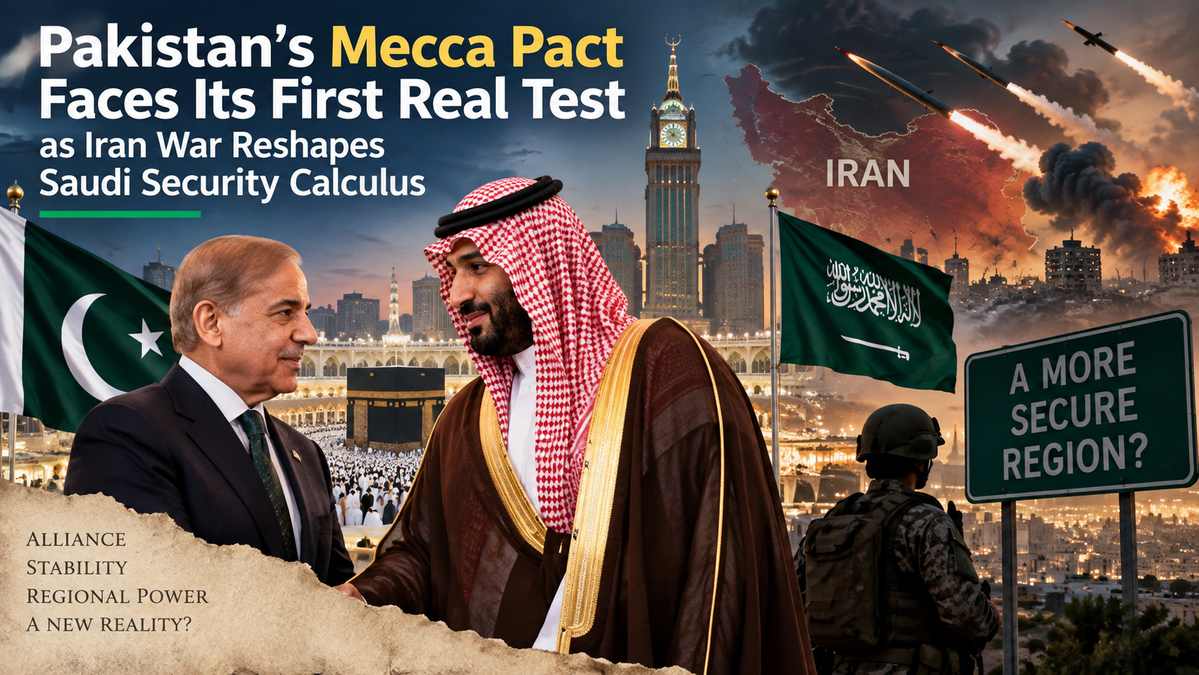
Reuters reported that Pakistan’s new defense commitments with Saudi Arabia and Turkey have increased the pressure on Islamabad to balance its relationships carefully.
Pakistan has also clarified that it has not discussed an immediate military response under its defense pact following Houthi attacks on Saudi Arabia.
That suggests Islamabad is attempting to avoid being pulled directly into a wider regional war while keeping its commitments to its partners.
This complicated balancing act provides important context for Laleh’s criticism.
But Iran Has Not “Fired” Pakistan
This is where the viral headline needs to be handled carefully.
Laleh is an Iranian journalist.
He is not speaking on behalf of the Iranian government simply because he is Iranian.
There is no evidence that Tehran has officially declared Pakistan’s diplomatic role finished or formally appointed India as its replacement.
Indeed, Pakistan continues to communicate with Iranian officials.
So the phrase “Mr Munir, you are fired” should be understood as a political comment made by an individual journalist, not as an official Iranian decision.
That distinction changes the meaning of the story.
India and Iran Have Their Own Strategic Interests
India’s relationship with Iran is not built solely around the current crisis.
The two countries have longstanding economic and strategic connections, including interests in trade, connectivity and access to the wider region.
India has also sought to maintain engagement with Iran despite its close relationships with the United States, Israel and Gulf Arab countries.
That balancing act is complicated.
India does not need to choose a single regional camp to protect its interests.
Instead, New Delhi has increasingly tried to maintain working relationships across competing blocs.
The BRICS summit provided another platform for that strategy.
The UAE Adds Another Layer
The diplomatic picture becomes even more interesting when the United Arab Emirates is added.
India has been strengthening its relationship with the UAE, while Iran has also been seeking improved regional ties.
Modi’s meetings with Gulf leaders around the BRICS summit therefore took place alongside India’s engagement with Tehran.
That creates a diplomatic environment in which New Delhi can speak to countries that do not always agree with one another.
The Indian government has described stronger India-UAE relations as important for peace, stability and prosperity in a region facing serious uncertainty.
Whether that translates into a formal mediation role is another question.
But the breadth of India’s relationships gives it diplomatic access across several regional divides.
Why the Journalist’s Comment Resonated
The remark attracted attention partly because it captured something larger in a single sentence.
West Asian diplomacy is changing rapidly.
Countries that once depended heavily on a small number of traditional intermediaries are increasingly developing multiple channels.
Iran talks to Pakistan.
Iran talks to India.
Pakistan maintains close relations with Saudi Arabia.
India works with Saudi Arabia, the UAE, Iran and the United States.
At the same time, BRICS provides a forum where countries with competing interests can sit at the same table.
The result is not a simple replacement of one regional power by another.
It is a more crowded diplomatic environment.
The Bigger Question Is Who Can Keep Talking to Everyone
That may ultimately be more important than Laleh’s “you are fired” line.
In a region where alliances overlap and conflicts increasingly affect global trade, diplomatic influence may depend less on making dramatic declarations and more on maintaining communication with multiple sides.
India’s position gives it an opportunity to do that.
Pakistan also continues to have important regional relationships.
Iran, meanwhile, has its own reasons for maintaining channels with both countries.
None of these relationships should be interpreted as permanent or exclusive.
A New Diplomatic Contest Is Taking Shape
The episode therefore offers a useful snapshot of a much larger transformation.
Pakistan wants to preserve its relevance as a regional security partner and potential intermediary.
India is expanding its economic, strategic and diplomatic engagement across West Asia.
Iran is maintaining multiple external relationships while confronting an unstable regional environment.
And Gulf states are increasingly seeking security arrangements that protect their territory, energy infrastructure and trade routes.
Laleh’s dramatic comment has become the most memorable part of that discussion.
But the underlying story is considerably more complicated.
No journalist can “fire” a foreign military chief from his diplomatic role. What the remark can do is expose a debate about who has influence, who can communicate across rival camps, and who may have a meaningful role in efforts to stabilize a region under extraordinary pressure.
For now, the evidence points not to Pakistan being formally replaced by India, but to a West Asian diplomatic landscape in which more countries are competing—and cooperating—for room at the table.