 alhodhodnews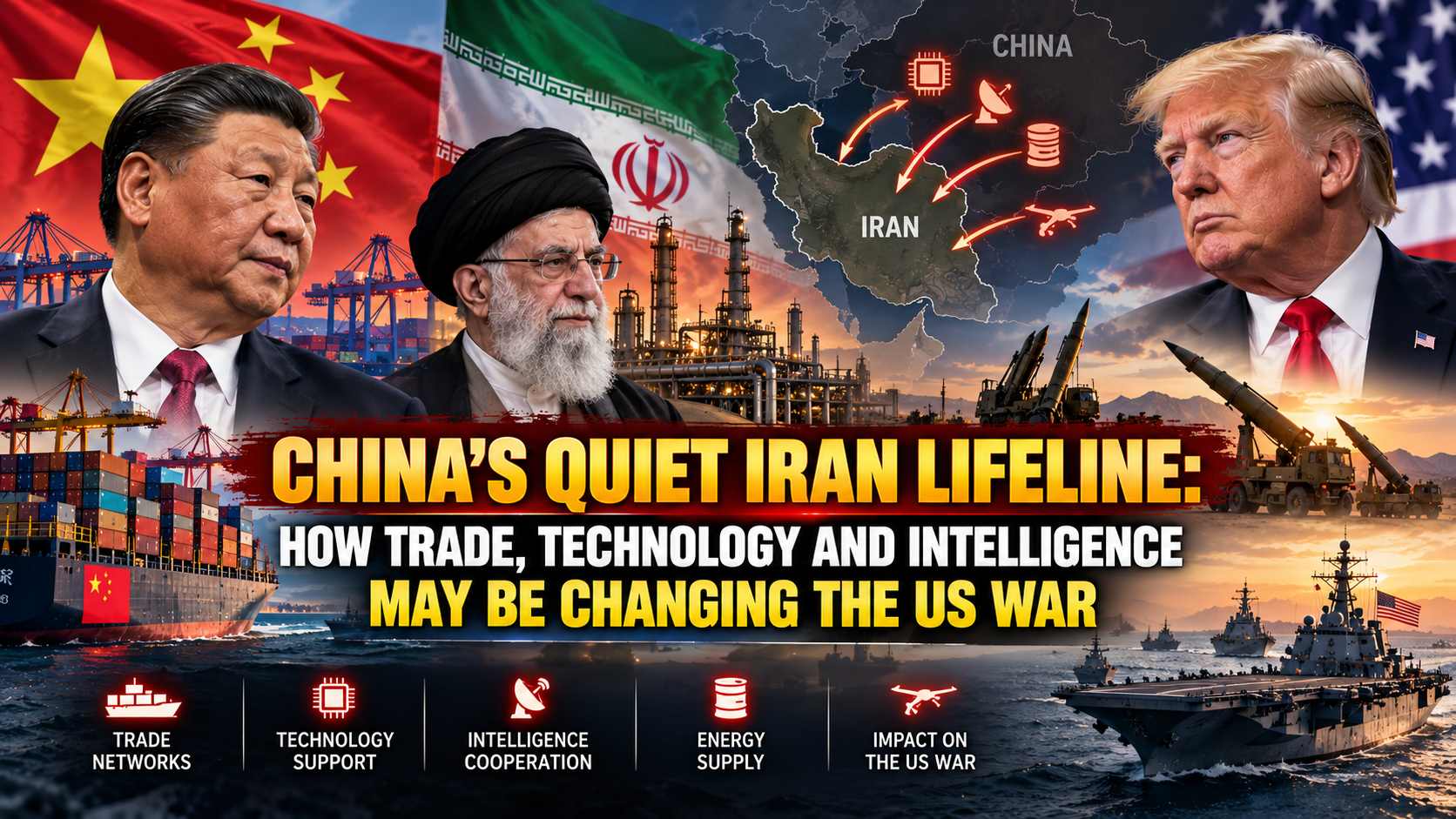
The most important support Iran is receiving in its war with the United States may not arrive in the form of fighter jets, tanks or obvious weapons shipments.
It may be coming through something far less visible: commercial components, satellite information, oil purchases, financial networks and technology that can serve both civilian and military purposes.
A recent investigation based on Iranian customs records, US officials and people familiar with the transactions has highlighted the scale of China’s economic and technological relationship with Iran. Around 1,300 shipments containing dual-use components were sent from China to Iran through the end of June, according to reporting cited by The Wall Street Journal and Moneycontrol.
These developments have created a difficult question for Washington.
How do you pressure a country at war when another major power can help keep its economy and critical industries functioning without openly entering the conflict?
That may be the more important story behind China’s role in the Iran war.
China Is Not Simply Sending Weapons
The phrase “Chinese aid to Iran” can create the impression that Beijing is openly arming Tehran.
The available evidence is more complicated.
The reported shipments include electronics, GPS-related equipment, electric motors and aircraft components. Such items can have legitimate civilian uses, but some can also be incorporated into drones, missile systems and other military equipment.
That distinction matters.
A shipment of a commercial component is not automatically a weapons shipment.
But in a prolonged war, even seemingly ordinary industrial parts can become strategically valuable if they help a country repair equipment, manufacture replacements or keep military production running.
That is where China’s economic relationship with Iran becomes significant.
The 1,300 Shipments Tell Only Part of the Story
According to the reporting, Iranian customs data showed approximately 1,300 shipments from China to Iran involving components with potential military applications through June.
Some shipments reportedly arrived during periods when the United States and Iran were observing temporary pauses in fighting.
The reported transactions included drone-related components worth millions of dollars.
The significance is not necessarily that every shipment was intended for Iran’s military.
Rather, the pattern suggests that China’s enormous manufacturing base can provide Iran with access to components that are difficult to obtain under Western sanctions.
In a war of attrition, that can matter enormously.
A missile that is fired cannot be recovered.
A drone that is destroyed must be replaced.
A damaged production line must be repaired.
Industrial resilience can therefore become almost as important as the number of weapons a country starts a war with.
China’s Oil Purchases Give Tehran Another Lifeline
There is an even bigger economic connection: oil.
China has become the largest buyer of Iranian crude, purchasing more than 80% of Iran’s oil exports according to figures cited by US lawmakers in the Wall Street Journal investigation.
That matters because oil revenue provides Tehran with money that can be used throughout its economy.
Washington’s sanctions strategy is designed in part to restrict Iran’s ability to generate those revenues.
But if Iranian oil continues reaching Chinese buyers through complex trading and financial arrangements, the pressure becomes harder to sustain.
Reuters has separately reported that Iran has used a barter-like mechanism in which oil is effectively exchanged for credits used to purchase Chinese goods, helping Tehran bypass some of the financial restrictions imposed by Washington.
That creates a powerful economic loop.
Iran supplies oil.
China receives energy.
Iran receives access to goods and components.
Both sides reduce their exposure to the US-dominated financial system.
Satellite Intelligence Could Be an Even More Sensitive Issue
The most serious allegation concerns something more valuable than physical components: information.
Recent US intelligence assessments described to CNN indicate that Chinese groups have provided satellite imagery and intelligence support that helped Iran improve its ability to track US forces and ships.
According to the sources cited by CNN, the imagery may have helped Iranian forces improve targeting around the Strait of Hormuz and contributed to the precision of an attack on a US base in Jordan in July that killed three American service members.
That claim is based on US intelligence assessments reported by CNN, rather than publicly released evidence establishing every detail.
But if accurate, the strategic significance is considerable.
Iran does not necessarily need China to hand it a new missile.
Giving Iranian commanders better information about where US ships and military assets are located could make existing weapons more effective.
In modern warfare, knowing where to strike can be nearly as important as having the weapon itself.
The Strait of Hormuz Makes This More Dangerous
The issue becomes even more important because Iran is fighting in and around one of the world’s most strategically important waterways.
The Strait of Hormuz is a critical route for global energy shipments.
Iran has used missiles, drones and other military capabilities to threaten shipping and US forces in the region.
Chinese satellite imagery and intelligence support, if the US assessments are accurate, could help Tehran monitor movements through the waterway and select better moments to launch attacks.
The consequences go beyond the battlefield.
Any significant disruption around Hormuz can affect oil prices, shipping costs, insurance rates and inflation across the world.
The war has already created severe pressure on energy markets, while attacks linked to the wider conflict have also affected Saudi infrastructure and Red Sea shipping routes.
Beijing Has Its Own Reasons for Helping Iran
China’s relationship with Iran should not automatically be interpreted as Beijing choosing to enter the war on Tehran’s side.
China has substantial interests in the Middle East.
It needs energy.
It wants access to Iranian oil.
It has built a long-term strategic relationship with Tehran.
And it has a broader interest in reducing the effectiveness of US sanctions and maintaining commercial access to countries targeted by Washington.
The US-China Economic and Security Review Commission has described China as a major economic and technological lifeline for Iran, particularly through oil purchases and access to dual-use technology.
From Beijing’s perspective, supporting economic resilience may therefore serve Chinese interests even without becoming a direct military participant in the conflict.
Why Washington Has Been Careful With Beijing
This creates a difficult calculation for President Donald Trump.
Washington can sanction Chinese companies and individuals accused of helping Iran.
The United States has already taken such measures against Chinese procurement networks linked to Iranian nuclear and missile programs.
But directly confronting Beijing carries its own risks.
The United States and China are already negotiating over trade, artificial intelligence, technology restrictions and Taiwan.
Opening another major confrontation over Iran could complicate those negotiations.
That helps explain why the issue has become so sensitive as Trump and Chinese President Xi Jinping engage in high-level diplomacy.
Trump Has Previously Played Down China’s Role
Trump has not always accepted the strongest claims about Chinese assistance to Iran.
In July, after Defense Secretary Pete Hegseth said China was enabling Iran at different levels, Trump questioned the characterization and said Xi had assured him that China would not provide weapons to Iran.
Trump also said he trusted Xi and Russian President Vladimir Putin while acknowledging that some forms of support could occur.
That position illustrates the difference between direct military assistance and the broader economic and technological support network now under scrutiny.
China may not need to ship missiles to influence the war.
It may be able to affect Iran’s ability to keep fighting simply by keeping money, components, information and commercial connections flowing.
Mahan Air’s Expanding China Flights Raise Questions
Another detail highlighted in the reporting is the increase in flights by Iran’s sanctioned Mahan Air between China and Iran.
According to FlightRadar24 data cited by The Wall Street Journal, the airline increased its China-Iran flights dramatically during the war, with many later flights appearing to be focused on cargo rather than passengers.
That does not by itself prove that weapons were being transported.
But the increase illustrates how important the China-Iran commercial corridor has become.
When traditional supply chains are restricted, alternative transportation routes can become strategically valuable.
Beijing Rejects the Accusations
China has rejected accusations that it is deliberately fueling the conflict.
Beijing has said it strictly regulates exports of dual-use goods and has rejected unilateral US sanctions, arguing that such measures violate international law.
That response is important because the available evidence does not establish that every Chinese shipment was intended for military purposes.
The distinction between commercial trade and military support is likely to remain one of the central disputes between Washington and Beijing.
Iran’s Advantage May Be Resilience, Not a Secret Chinese Arsenal
The biggest lesson from the emerging evidence may therefore be different from the headline.
China’s most important contribution to Iran may not be a hidden stockpile of weapons.
It may be resilience.
If Iran can continue selling oil, acquire industrial components, access financial channels and obtain better information about US military movements, then American pressure becomes more difficult to translate into a quick military or economic collapse.
That could extend the conflict.
And the longer the conflict lasts, the more important these networks become.
A New Kind of Great-Power Competition
The Iran war is increasingly showing how modern conflicts can involve countries without those countries formally entering the battlefield.
China can support Iran economically.
Russia can provide various forms of assistance.
Regional armed groups can open additional fronts.
The United States can respond with sanctions, military operations and diplomatic pressure.
None of this necessarily requires a formal declaration that China or Russia has joined Iran’s war.
That is what makes the situation so difficult to manage.
The battlefield is no longer just missiles and aircraft.
It is also supply chains, satellite imagery, financial systems, commercial aviation and energy markets.
The Real Question for Washington
The central question for Washington is no longer simply whether China is “helping Iran.”
There is already substantial evidence of significant Chinese-Iranian economic and technological cooperation, while allegations about intelligence support are receiving increased scrutiny from US officials and lawmakers.
The harder question is how far Beijing is prepared to go — and what Washington is prepared to do about it.
If the United States responds too aggressively, it could trigger another confrontation with China at a time when the two powers are trying to stabilize their broader relationship.
If Washington responds too cautiously, Chinese support could continue helping Iran withstand pressure.
That is the strategic dilemma.
China’s Quiet Role Could Become One of the War’s Biggest Stories
The most consequential part of China’s involvement may be precisely what makes it difficult to see.
There is no confirmed evidence that Beijing has openly entered the war on Iran’s side.
Instead, the emerging picture is of a complex network involving oil purchases, commercial shipments, dual-use technology, financial arrangements and, according to US intelligence assessments, satellite information.
That network may not give Iran a decisive new weapon.
But it could help Tehran keep its existing system operating.
And in a long war, that can be powerful.
The United States may therefore be fighting Iran on the battlefield while simultaneously confronting a much larger question in Washington: how do you pressure one adversary when another major power can help it remain economically and technologically resilient without openly becoming a belligerent?
That question could ultimately prove more important than any single shipment.
Because the hidden advantage may not be a secret Chinese weapon at all.
It may simply be the ability to keep Iran supplied, connected and capable of fighting for another day.